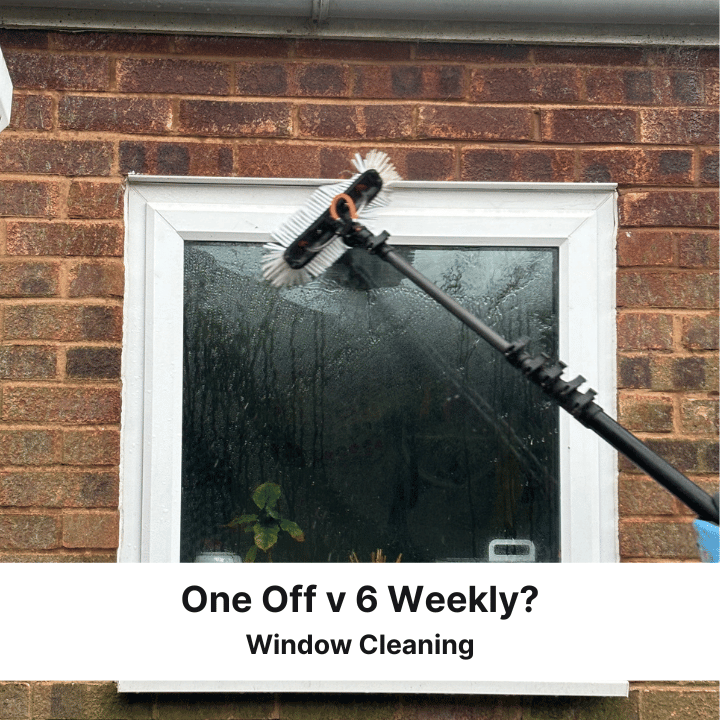
Problems With Water-Fed Pole Window Cleaning
(by a window cleaner)
Water-fed pole window cleaning has become the industry standard across the UK since it was introduced in the late 90's.
It’s safer, more efficient, and allows windows to be cleaned thoroughly from the ground using purified water
That said, it isn’t perfect.
We been cleaning windows since 2017, slightly before the company was officially formed.
Over the years we’ve carried out many different types of cleaning, including internal window cleaning for a period of time but today we specialise purely in exterior cleaning
Water-fed pole cleaning works extremely well in most situations, but there are downsides — and we think it’s only right to talk openly about them.
Being upfront doesn’t mean the system doesn’t work; it simply helps homeowners understand what to expect and why certain issues can occasionally occur.
Spotting Marks on Glass After the First Clean
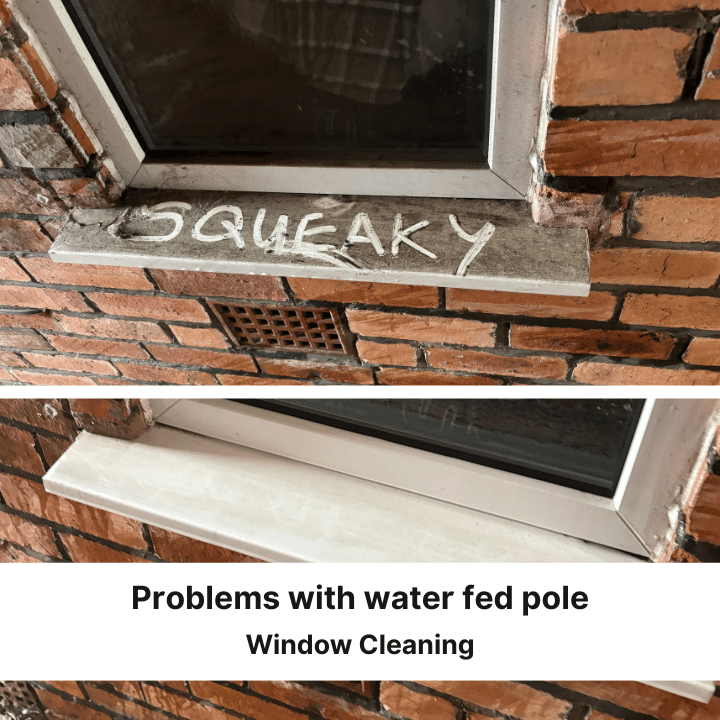
An issue we occasionally see… through the windows particularly after an initial first clean is what's known as spotting.
Spotting looks like light soapy looking dots that dry on the glass once the purified water has evaporated.
For this we are going to assume the water quality is good, and the water has been purified as this is the base standard for window cleaners to complete the job using this method.
There are two main reasons this "Spoting" can happen outside of poor water quality, it's typically to do with the window cleaning technician or the condition of the window frames.
Poor cleaning method
First, there can sometimes be an element of operator error. For example:
- The windows may not have been rinsed thoroughly enough
- The brush head may have been contaminated during the cleaning and transferred the dirty or milky water to the glass
- Simply a window might have been missed all together just by not following a process
Water-fed pole cleaning relies heavily on proper rinsing.
If that final rinse isn’t thorough, residue can dry on the glass and leave marks behind. That’s simply the reality of the cleaning process.
From the Property’s Perspective
More commonly, spotting occurs on windows that haven’t been cleaned properly for a long time.
When purified water is introduced, it doesn’t just clean the glass — it also flushes:
- Frames
- Seals
- Trickle vents
- Corners and recesses
On neglected windows, years of dirt and residue can sit hidden inside those areas.
Even after the cleaner has finished rinsing, small amounts of dirty water can continue to release from seals or vents as the frames dry or expand slightly.
When that water runs onto the glass and dries, it can leave marks that weren’t visible when the cleaner was still on site.
Why Wet Windows Can Still Spot
With water-fed pole window cleaning, the windows are intentionally left wet after rinsing.
Because the water is ultra-purified, it contains no minerals, so when it dries naturally it should leave no spots or residue on the glass.
That’s how the process is designed to work.
However, problems can occur where detergents from previous traditional window cleaning are still present — particularly inside UPVC frames and seals.
Here’s what can happen:
- Detergent residue can sit inside the frame for years
- The purified water draws that contamination out
- The glass is left wet and clean
- But the contaminated frame may continue to release residue afterwards
If that residue drips back onto the glass while it’s drying, it can leave spotting — even though the glass itself was cleaned correctly.
This doesn’t mean the purified water has failed. It means some water may have ran off the frames onto the glass.
Ultimately, this is the responsibility of the cleaner and there are methods to account for this happening by adjusting the cleaning process.
But in most cases the issue improves significantly on the second clean and its usually resolved.
Once the frames are free from detergent contamination, the purified water dries exactly as intended — clean and spot-free.
Kind of noisy window cleaning?
When it comes to jobs around the home, lawn mowing and leaf blowing takes the title when it comes to making noise.
But if you’re at home — working, on a Zoom call, reading, watching TV or in bed — the sound of the brush against the glass and the flow of water can be noticeable inside the house.
Even though the amount of water used isn’t large, it can create a rushing or gushing sound when it hits the glass, especially if the flow rate is high.
Compared to traditional window cleaning using a mop and squeegee, water-fed pole cleaning is generally louder.
Noise vs Privacy
However, there’s a trade-off.
While it may be louder than traditional window cleaning, WFP window cleaning is typically more private.
There’s no one standing on ladders outside upstairs windows or working directly at eye level close to the glass
Older Leaded Windows and Water-Fed Poles
Leaded windows require extra care — and they’re one of the few areas where water-fed pole cleaning needs to be approached very cautiously.
First, it’s important to understand that there are
two very different types of leaded windows.
1. Modern Decorative Lead
Most homes built in the last 15–20 years with “leaded” windows don’t actually have structural lead.
Instead, they have decorative lead strips bonded onto the outer surface of the glass.
These are usually fine to clean when handled properly.
However, if the decorative lead has been exposed to years of UV light — especially on south-facing properties exposed to lots of sun— the adhesive bonding it to the glass can begin to deteriorate. Over time, the lead can:
- Become brittle
- Split or crack
- Loosen from the surface
In those cases, even light contact from a nylon bristle brush can disturb the lead.
2. Traditional Leaded Windows (Structural Lead)
Then you have much older, traditional leaded windows — the type where the lead actually holds small panes of glass together, similar to what you might see in churches or period properties.
These are usually found on character homes or as feature windows. In many cases, they are cleaned very delicately or sometimes left entirely at the homeowner’s discretion.
With these windows, the risk isn’t just cosmetic — the lead is part of the structure. Extra caution is always required.
Who is a water fed pole window cleaning not good for?
If you have delicate leaded windows, it's probably best to have a traditional window cleaning service where the glass itself can be buffed up with a cloth regularly to keep the glass clean.
After the window cleaning is completed you are not okay with the purified water being left on the windows to dry naturally, water fed pole window cleaning is not for you.
Some people just love a traditional window cleaner, its old school, rare and for some home owners its familiar
We understand that water fed pole window cleaning is just not for everyone, but for the right homes and when completed professionally we find it a very effective way to clean windows and most home owners love it.
I hope you found this article helpful :)