Pressure washing vs soft washing a patio or driveway - what’s the difference
In short, pressure washing uses high-pressure water to remove dirt, grime, moss, and surface build-up “the top layer of dirt and moss”
Soft washing uses very low pressure — often lower than the pressure and flow that comes from a normal outdoor tap — and relies on cleaning chemicals to clean the surface, deal with organic growth
So the difference is not just the pressure.
It is also the
cleaning method itself.

What is pressure washing?
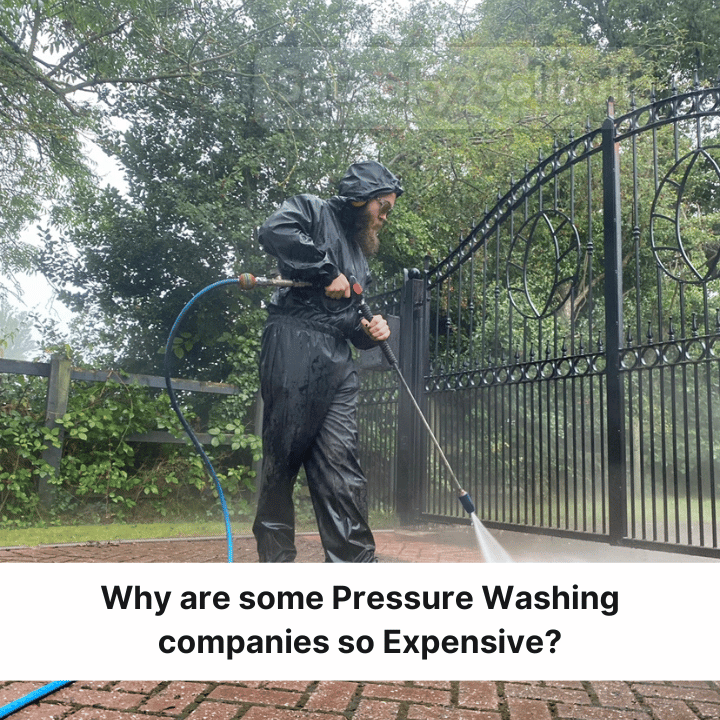
Pressure washing is the use of water at pressure to clean exterior surfaces such as patios and driveways
Although people often think of pressure washing as one fixed level of force, that is not really how it works in practice. A pressure washer can often be adjusted, and the way it is used depends heavily on the type of surface being cleaned.
Some surfaces can cope with a more aggressive clean, while others need a much more delicate approach.
So pressure washing is not simply about blasting a surface as hard as possible. It is a tool used by exterior cleaning contractors, and it needs to be used in a way that suits both the surface type and its condition.
When done properly, pressure washing can make a huge visual difference quite quickly. It is often the best way to remove built-up grime and compacted dirt and moss
What is soft washing?
Soft washing is a chemical cleaning process
It is commonly used to deal with lighter staining and organic growth such as:
- algae
- lichen
- mildew
- moss
- other biological growth
In some cases, these stains cannot always be fully dealt with by pressure washing or hot water pressure washing alone
The two main types of products commonly used in soft washing are usually:
- bleach-based treatments, which tend to give a more immediate visible result
- biocide-based treatments, which are slower to take a visual effect and will show the result depending on the product and surface over the next 1-6 months typically
So while pressure washing relies mainly on the force of water, soft washing relies mainly on the chemical process of cleaning organic material from exterior hard and soft surfaces.
What are considered hard and soft surfaces?
Hard surfaces include :
- Block paving
- Concrete pours
- Concrete paving slabs
Soft surfaces include:
- Tarmac
- Resin bonded
- Natural stones(particularly the jointing)
- Render walls
Which method is better for a driveway?
For many driveways, especially surfaces such as block paving, tarmac or resin pressure washing is often the main starting point.
That is because driveways often have a significant amount of compacted grime worked into the surface over time from cars, foot traffic, weather, and general use.
If that dirt is embedded into the surface, it usually needs physically removing first, not to mention the typical things like moss
In that kind of situation, pressure washing is often the best initial method because it can clean into the surface and remove that built-up contamination.
After that, soft washing is often used as a follow-up treatment to help deal with remaining organic growth and improve the longevity of the clean.
So for many driveways, it is not really a case of pressure washing or soft washing.
Often, the best result comes from using
pressure washing first, followed by
soft washing where appropriate.
Can pressure washing damage a patio or driveway?
Yes, it absolutely can if it is used incorrectly.
That is one of the main reasons it is important to understand the difference between these methods and to use the right approach for the surface.
If used badly, pressure washing can:
- remove too much jointing sand from block paving
- damage pointing or weak joints
- leave marks on softer stone surfaces
- etch or engrave delicate materials
- damage tarmac or resin if the pressure is too high
That does not mean pressure washing is bad.
It just means it needs to be used in a way that is suitable for the surface type and the condition that surface is in.
Is soft washing safer than pressure washing?
Not particularly.
Because the word soft is used, people sometimes assume it is always the safer option. In terms of physical force, it usually is gentler than pressure washing.
But soft washing still uses chemicals, and those chemicals still need to be used correctly.
If handled poorly, they can affect things like:
- nearby plants
- ponds
- surrounding surfaces
- drainage areas
So while soft washing can reduce the risk of physical impact damage, it still requires care, knowledge, and the right process.
Which one gives the best results?
In real-life situations, the best results usually come from using the right method for the surface, rather than assuming one approach is always better.
Sometimes that means pressure washing.
Sometimes it means soft washing.
And sometimes it means using a combination of both.
Why do some companies recommend different methods?
This often comes down to a few things:
- the type of surface
- the condition of the area
- the company’s knowledge and experience
- the equipment they use
- whether they are offering a basic clean or a more complete treatment process
So if different companies recommend different methods, it does not always mean one is right and the other is wrong.
It may simply mean they are approaching the job differently.
That is why it is always worth asking questions such as:
- Why are you recommending that method?
- Is any treatment included as well as the cleaning?
- Are you quoting for a basic clean or a more complete result?
Which method does Squeaky Solihull use?
At Squeaky Solihull, we often use a combination of both, depending on the surface and the environment around it.
In many cases, pressure washing is the best way to remove the heavy surface grime and restore the appearance of a patio or driveway. Soft washing can then be used where appropriate to treat organic growth more thoroughly and help improve the overall result.
So rather than treating one method as always better than the other, we prefer to use the method — or combination of methods — that best suits the surface we are cleaning to get the best results in a responsible way
We have committed to answering many questions about the services we offer in the most transparent way possible.
If you have any questions we have not answered in the articles below, feel free to drop us a message and we will do our best to help you out with questions regarding the cleaning of your driveway or patio.